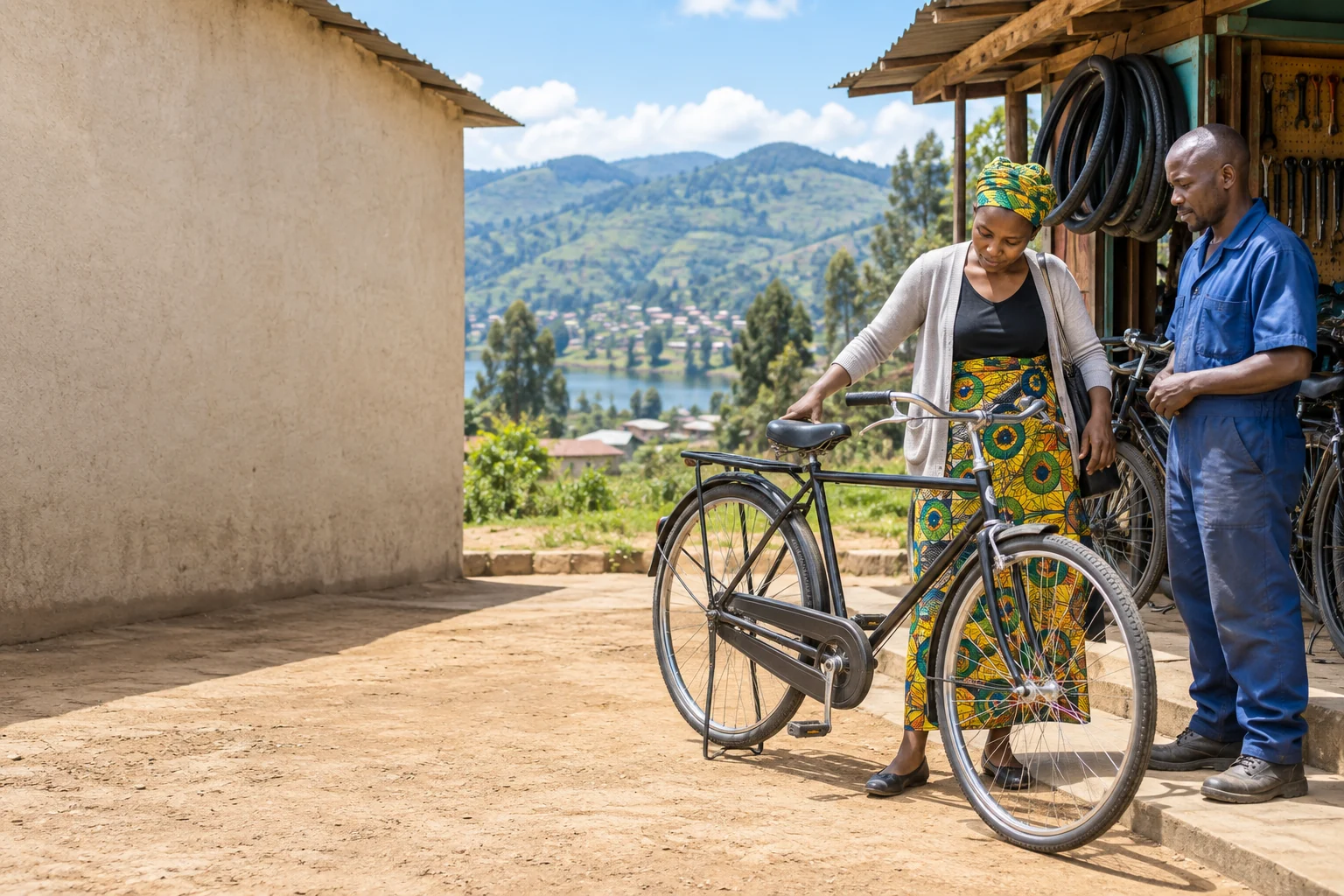
A bicycle, water tank or farming tool may take time to plan for. Start with the need it will meet, then check the costs before paying.
Steps to follow
Define what you need
Write down what the item should do and when you need it. Consider whether an existing item can be repaired or the purchase can wait.
Compare cost and condition
Ask different sellers about comparable items. Check condition, what is included, the receipt and how faults or repairs are handled after purchase.
Include the full cost
Include transport, installation and what is needed to start using it. Allow for running costs and repairs as well as the purchase price.
Match the purchase to your savings
Subtract the savings already set aside to find the remaining gap. Choose a timetable based on money left after essentials. Adjust the timing or the item if the figures do not fit.
A planning example
An illustrative equipment budget
Suppose equipment costs 70,000 RWF, transport 5,000 RWF and initial supplies 5,000 RWF: 80,000 RWF altogether. With 20,000 RWF already saved, the gap is 60,000 RWF. Saving 10,000 RWF a month would take six months if the cost stays the same and that amount is affordable. These are illustrative figures, not market prices.
Your reminders
- I know what I am buying and why.
- I included costs beyond the price tag.
- My plan leaves room for essential expenses.